India’s Broken Logistics
The Hidden Trap in India’s Export-Import Game: How Manual Agent Dependence Slows Growth
India’s Broken Logistics Reality:
Why Exporters, Importers & Truckers Are Trapped in Chaos (and Who Pays the Price)
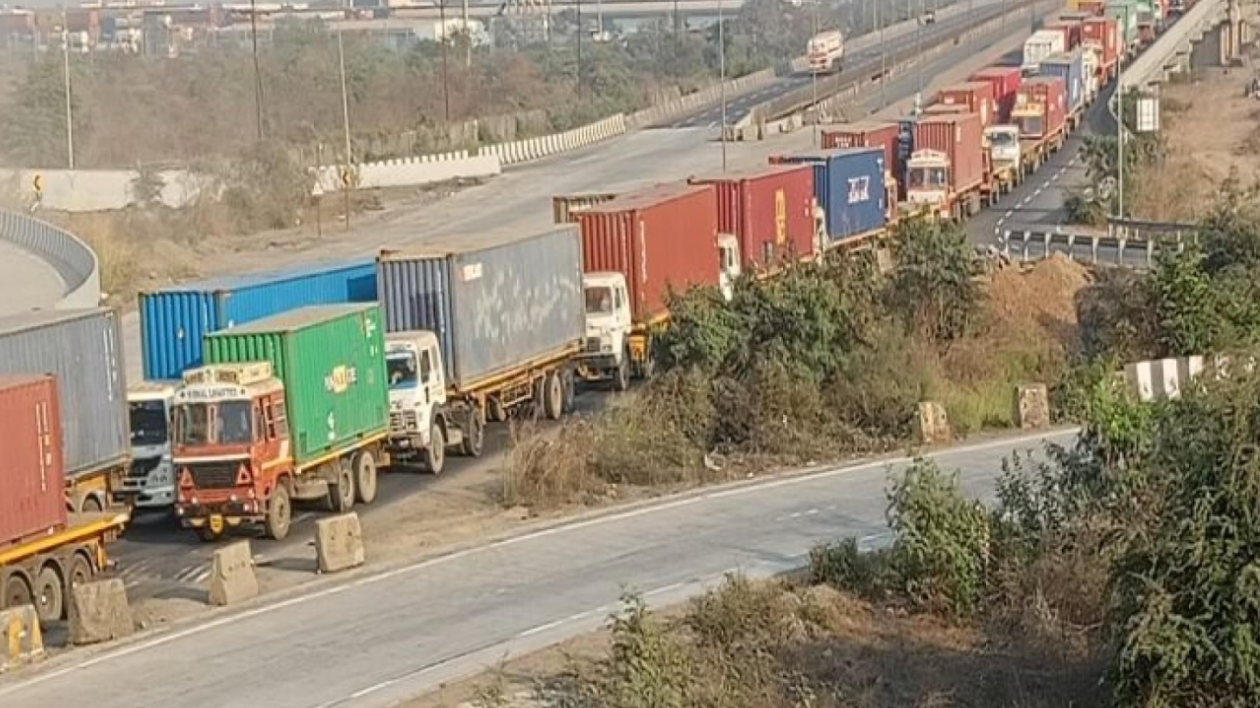
India is pushing hard to become a global manufacturing and export powerhouse. But beneath the policy headlines and export numbers lies a deeply broken ground reality in logistics—especially in trucking and port-side operations. If you talk to exporters, importers, CHAs, transporters, or truck drivers, one thing becomes clear: Logistics in India still runs on WhatsApp, phone calls, guesswork, and blame. This blog breaks down the real problems, point by point, exactly as they happen on the ground.
1. Truck Booking Is Still Informal, Fragmented & Unreliable
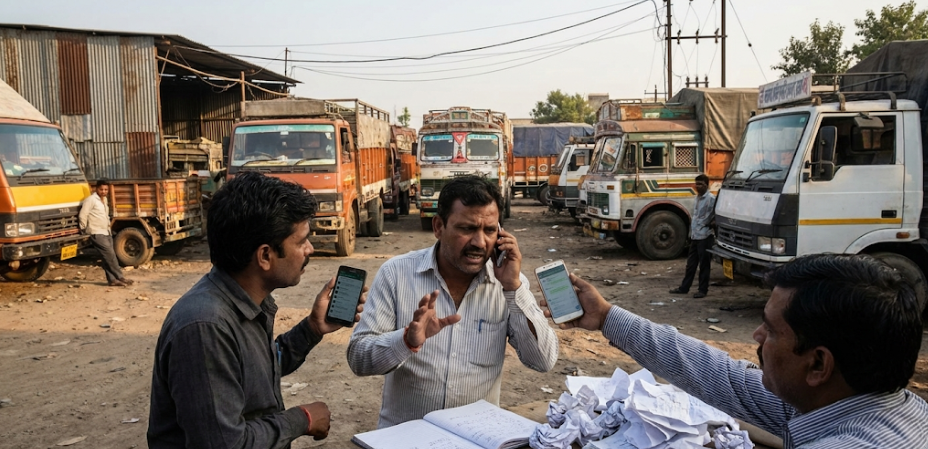
How it works today When an exporter or importer needs a truck, they usually have three options: Directly call a known transporter Ask a broker Ask the CHA, who then calls their transporter Most of this happens via: 📱 WhatsApp messages ☎️ Phone calls ✉️ Emails There is no standardized system. The problems No fixed or transparent pricing Rates change based on mood, urgency, or demand No confirmation of: Truck type Capacity Fitness Container compatibility By the time the truck arrives, reality often doesn’t match expectation.
2. Wrong Truck, Wrong Time, Wrong Place
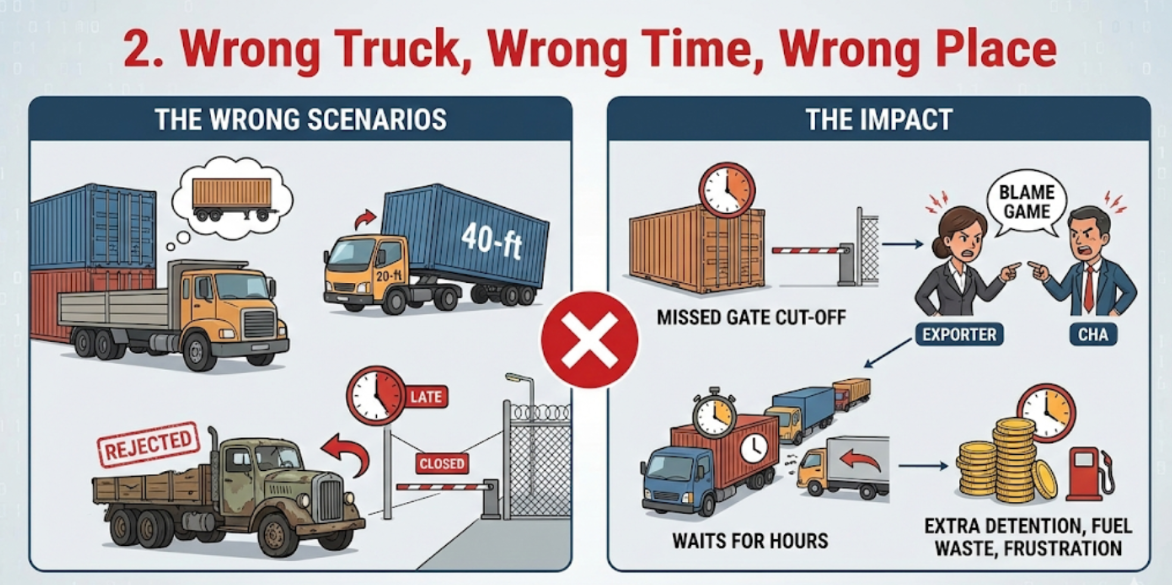
One of the most common pain points: The truck that arrives is not the truck that was promised. Examples Open truck arrives instead of container trailer 20-ft compatible truck sent for 40-ft container Old or unfit vehicle rejected at gate Truck arrives too early or too late Impact Cargo misses gate cut-off CHA and exporter start blaming each other Truck waits for hours or gets turned back Extra detention, fuel waste, and frustration No one takes accountability—because nothing was formally tracked.
3. Zero Visibility Once the Truck Leaves the Yard
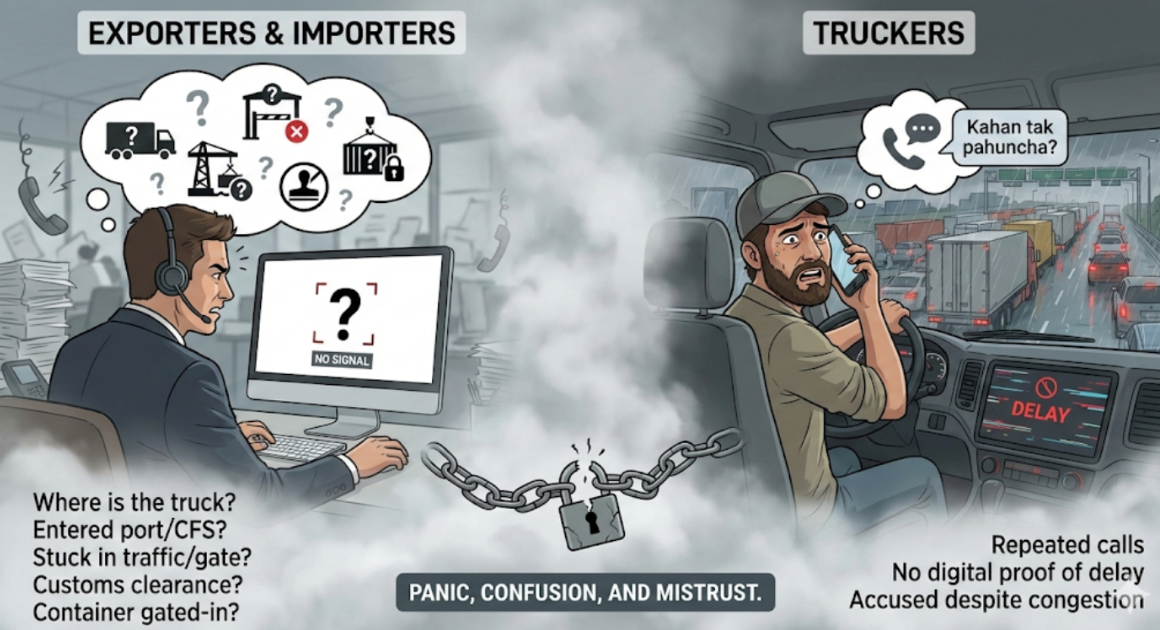
Once a truck starts moving, everyone goes blind. What exporters & importers don’t know Where exactly is the truck? Has it entered the port or CFS? Is it stuck in traffic or waiting at a gate? Has customs clearance started? Is the container gated-in or still outside? What truckers face Repeated calls: “Kahan tak pahuncha?” No digital proof of delay cause Accused even when delay is due to port congestion This lack of visibility creates panic, confusion, and mistrust.
4. No Gate-In / Gate-Out Transparency
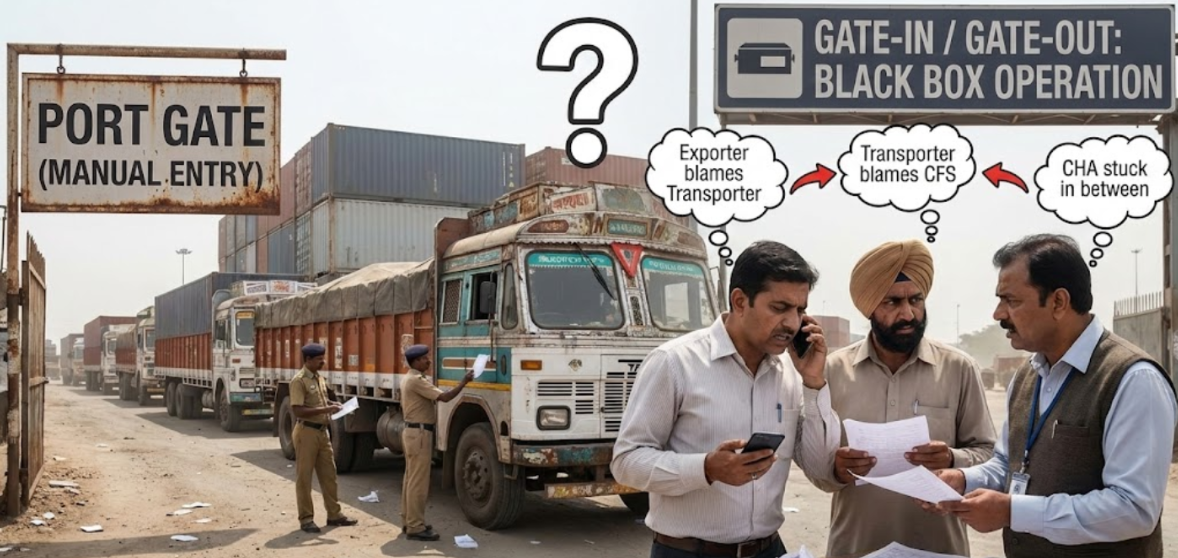
Ports and CFS operations are black boxes. Current reality Gate-in times are not digitally synced with exporters Gate-out delays are not transparently recorded Manual slips, stamps, and verbal updates dominate Result Exporter blames transporter Transporter blames CFS CHA gets stuck in between No data to prove who caused the delay This is where the blame game begins.
5. Custom Clearance & Container Movement Are Poorly Coordinated
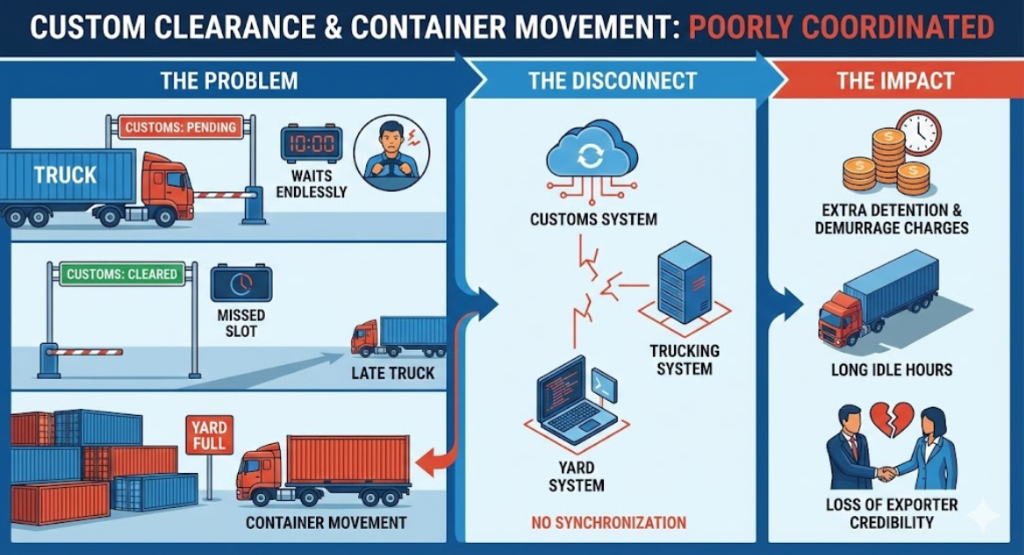
Customs clearance, container movement, and truck arrival are not synchronized. What goes wrong Truck arrives before customs clearance → waits endlessly Customs cleared but truck arrives late → missed slot Container movement not aligned with yard availability Impact Long idle hours Extra detention & demurrage charges Loss of exporter credibility with buyers All because systems don’t talk to each other.
6. Queue Mismanagement at Ports & CFS
Queues are unmanaged, unpredictable, and inefficient. Ground reality No appointment-based truck entry No digital queue numbers No estimated waiting time First-come-first-serve is rarely followed Consequences Trucks wait 6–12+ hours Engines running → fuel wasted Drivers exhausted Cargo delayed This is not congestion—it is poor queue intelligence.
7. Dead Miles: The Silent Killer of Trucking Economics
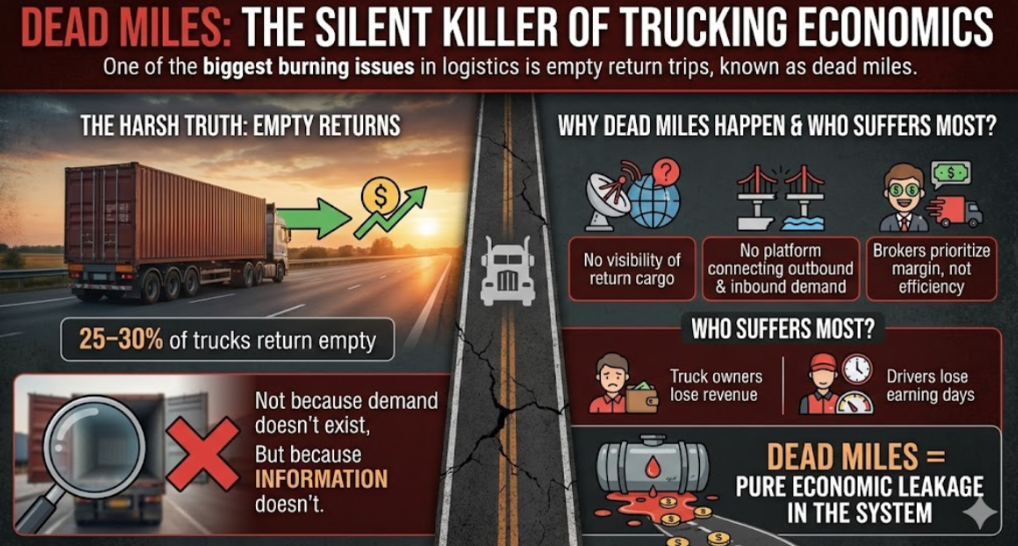
One of the biggest burning issues in logistics is empty return trips, known as dead miles. The harsh truth 25–30% of trucks return empty Not because demand doesn’t exist But because information doesn’t Why dead miles happen No visibility of return cargo No platform connecting outbound & inbound demand Brokers prioritize margin, not efficiency Who suffers most? Truck owners lose revenue Drivers lose earning days Fuel, tolls, and maintenance still apply Dead miles are pure economic leakage in the system.
8. Physical Stores, Manual Records & Repetitive Data Entry
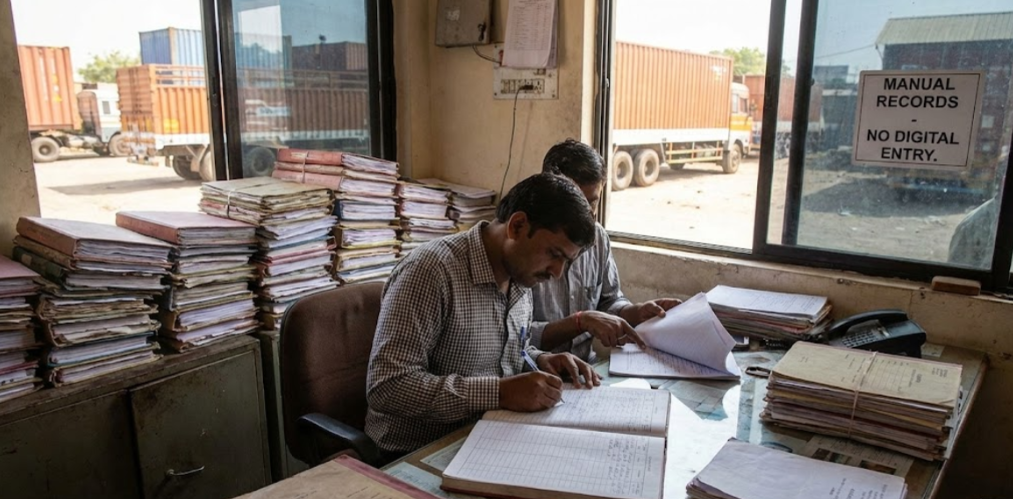
Despite digital India, logistics still runs on paper. Current practices Physical yards maintain manual registers Orders are stored physically Same data entered again and again: By exporter By CHA By transporter By CFS Problems caused Data mismatches Delays in verification Human errors No single source of truth Manual operations slow everything down.
9. Poor Arrival-Time Coordination = Long Waiting Hours
Timing mismatch is constant. Scenarios Truck arrives too early → no gate entry Truck arrives late → slot missed Yard full → truck parked outside Impact Driver idle time Fuel consumption Mental and physical fatigue Lowest earning days for drivers No one optimizes arrival windows.
10. Detention & Demurrage: A Growing Financial Burden
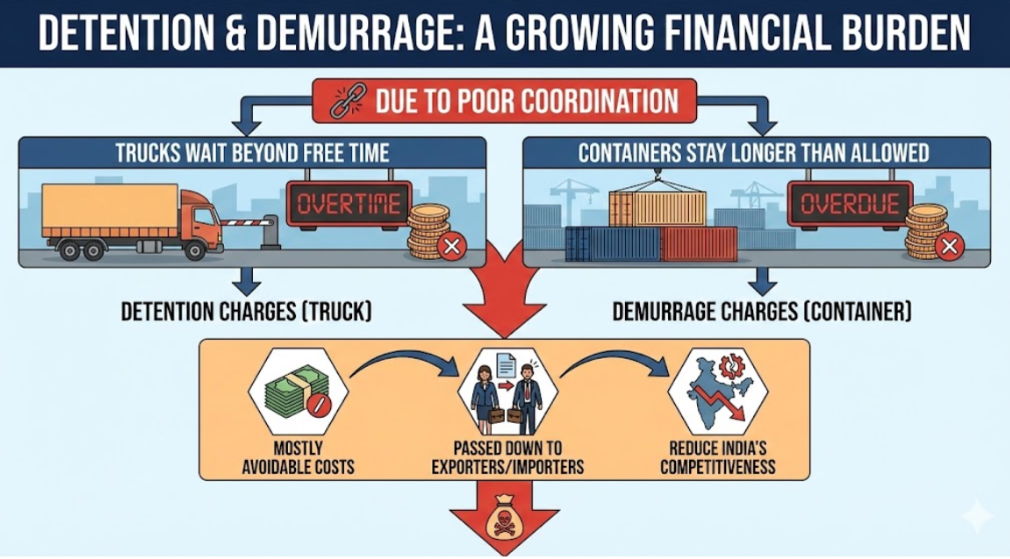
Due to poor coordination: Containers stay longer than allowed Trucks wait beyond free time Result Detention charges (truck) Demurrage charges (container) These costs: Are mostly avoidable Get passed down to exporters/importers Reduce India’s competitiveness
11. Delayed Payments & Financial Stress for Truckers
Truck drivers and small fleet owners suffer silently. Common issues Payments delayed by weeks or months No payment assurance No real contract enforcement Brokers control cash flow Effects Financial stress Driver dissatisfaction Low trust in exporters High attrition Truckers rarely deal directly with exporters—and brokers take a big cut.
12. Brokers Capture Margin, Not Accountability
Brokers play a dominant role, but: They don’t own trucks They don’t control ports They don’t take responsibility Yet they: Control pricing Control information Capture margins The system rewards middlemen, not efficiency.
13. The System Is Designed for Blame, Not Accountability
When cargo gets stuck: Exporter says: Transporter late hai Transporter says: Port jam hai CHA says: Customs delay Driver says: Gate band tha Everyone might be right—but no one can prove it. Because: No shared data No real-time tracking No event-based logs
##Final Truth: India’s Logistics Problem Is an Information Problem
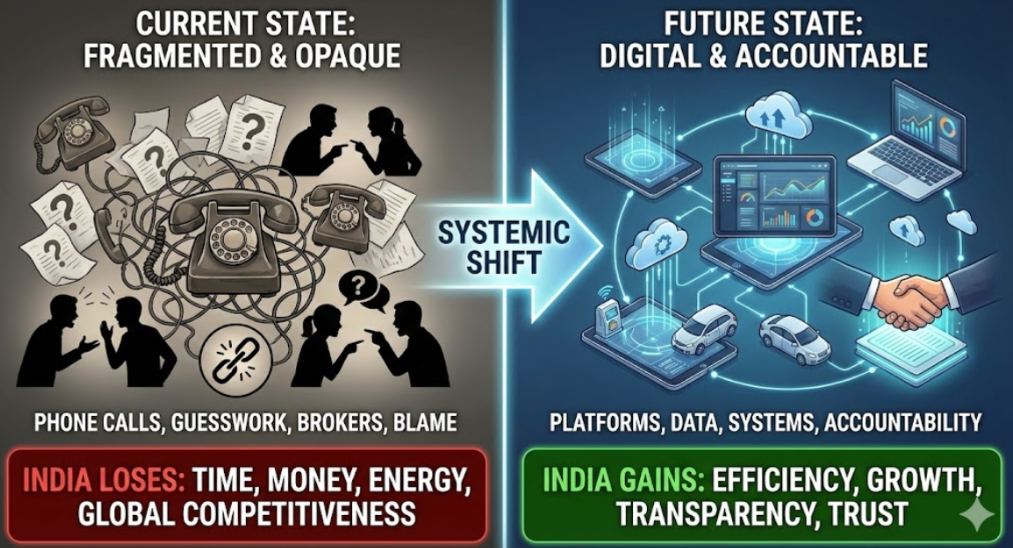
This is not just a trucking issue. It’s not just a port issue. It’s not just a CHA issue. It is a systemic lack of visibility, coordination, and accountability. Until logistics moves from: Phone calls → platforms Guesswork → data Brokers → systems Blame → accountability India will continue to lose: Time Money Energy Global competitiveness